
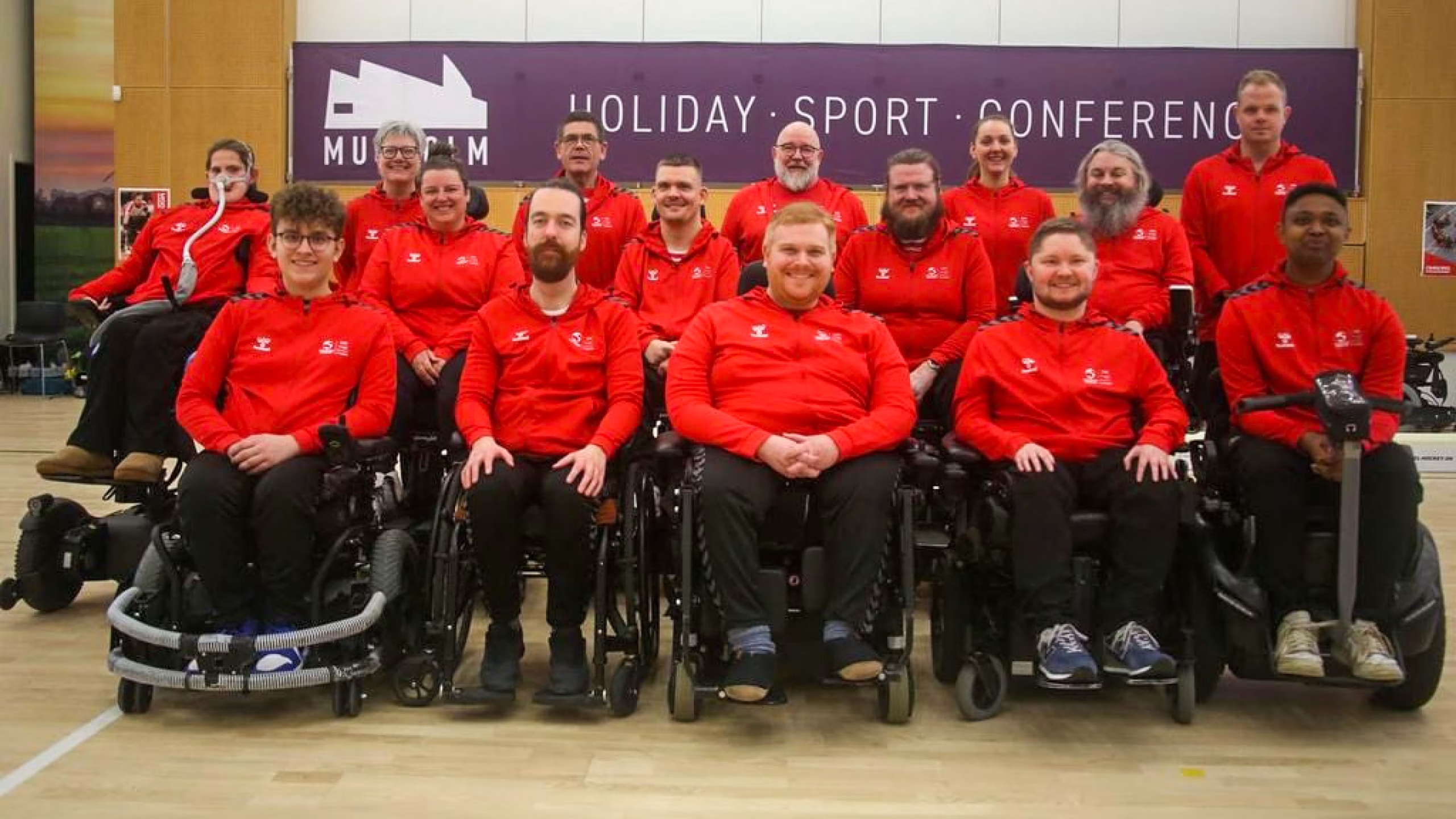
Denmark: Defending Champions at the World Championship 2026
As we approach the next World Championship, IPCH is launching a special collaboration to present all participating teams. For this project, we are proud to work with Paul Emmering, former German handstick player and scorer of Germany’s historic 2010 World Championship golden goal. With his long-standing experience in Powerchair Hockey, Paul will provide analyses, insights, and expert perspectives throughout our road to the World Championship. In this article, you can read more about Denmark’s insights.
A Small Nation with a Strong Sporting Identity
Located in Northern Europe, Denmark is one of the smaller nations in the 2026 World Championship in terms of population, yet its impact on international Powerchair Hockey is anything but small. The country has around 6 million inhabitants and is frequently ranked among the happiest nations in the world, a reflection of strong social cohesion, trust and a well structured welfare society.
The capital Copenhagen is widely recognized as a cultural and culinary hotspot in Scandinavia, home to world leading restaurants and a high concentration of Michelin starred dining. Beyond gastronomy, Denmark has produced global cultural icons such as LEGO and the literary legacy of Hans Christian Andersen. Its influence also extends into modern innovation, with figures like Lars and Jens Eilstrup Rasmussen, Danish born developers who contributed to Google Maps, a tool used worldwide including by international sports teams traveling to tournaments like Pajulahti.
From Limited Numbers to Elite Status
Given the relatively small active player pool in Danish Powerchair Hockey, the country’s rise on the international stage is all the more remarkable and underlines the exceptional development it has achieved within the sport. What followed, however, was a development curve that few could have predicted.
Over time, Denmark built structure, depth and identity, transforming from an emerging nation into a genuine global contender. The breakthrough came at the 2018 World Championship in Italy, where Denmark shocked favourites Netherlands in the semi final. That victory marked a shift in the international hierarchy.
Four years later, at the 2022 World Championship in Switzerland, Denmark completed its rise by winning the world title after once again defeating the Netherlands, this time in a dramatic final. It was the peak of a long and carefully built development process.
The People Behind the Rise
A key figure in Denmark’s development is Dorte Berenth, who has worked for many years behind the scenes to strengthen the structure of the sport nationally and internationally. She also played an important role in ensuring the success of Denmark as host of major international events, including the 2024 European Championship.
Another influential figure is Rasmus Yder, who stepped in shortly before the 2022 World Championship. He helped stabilize the team, introduced an effective tactical structure and contributed significantly to the collective mindset that led to Denmark’s first world title.
On the court, the defining figure remains Anders Berenth. The all-time leading scorer for Denmark and now the highest scoring player in international Powerchair Hockey history, Berenth has reached 158 international goals. His finishing ability, positioning and consistency make him the central reference point of the Danish attack.
A New Cycle After a Peak
Despite entering the tournament as reigning world champions, Denmark arrives in Finland in a phase of transition.
Head coach Carsten Nystrup now leads the team together with Nicklas Lundgren-Charlton, who takes on a unique dual role as both part of the coaching setup and an active player within the squad. Supporting them on the staff is new assistant coach and physio Lærke Juhl Nielsen. Together, the Danish staff faces the challenge of guiding a new generation while maintaining the disciplined identity that brought Denmark its historic world title. The main task is to guide the team through structural change while maintaining competitiveness at the highest level. A significant departure is the loss of Alexander Pedersen to Australia, removing an important creative and scoring presence from the Danish system. That makes internal adaptation even more important.
In goal, Alexander Ibsen remains a key figure. His experience, including time in the Italian league, has added stability and confidence in high pressure situations.
Danni Mogensen provides structure as a Hand stick player, contributing heavily in defensive organization and transition phases. His experience is especially valuable during difficult stretches of matches.
Offensively, alongside Berenth, Nikolaj Richelsen plays an increasingly important role. With 41 international goals, he is already among Denmark’s top scorers and continues to grow as a consistent offensive threat.
Tactical Identity and Competitive DNA
Denmark’s identity has traditionally been built on compact defensive organization, discipline and efficient transitions. That structure was central to their World Championship success and remains a core part of their competitive DNA. Offensively, the system is typically based on controlled build up play, strong blocking actions and selective, high quality attacking decisions rather than volume based passing or constant pressure.
The tournament begins immediately with a high stakes encounter against host nation Finland. Both teams are direct contenders for a knockout stage place, making the opener potentially decisive for group positioning. Further matches against developing side Spain are followed by crucial games against Italy and Switzerland.
Outlook
Denmark enters the 2026 World Championship as reigning champion but not as an established favourite without questions. The transition phase is real, but so is the foundation built over the last decade. If the team manages to maintain its defensive discipline while redistributing offensive responsibility more broadly, Denmark remains a potential candidate for reaching the semi finals again. In a tight group and a highly competitive field results are difficult to predict. Small margins will decide whether this generation can continue its remarkable run.