Athlete of the Year Noé Spirig on Performance, Responsibility and Impact
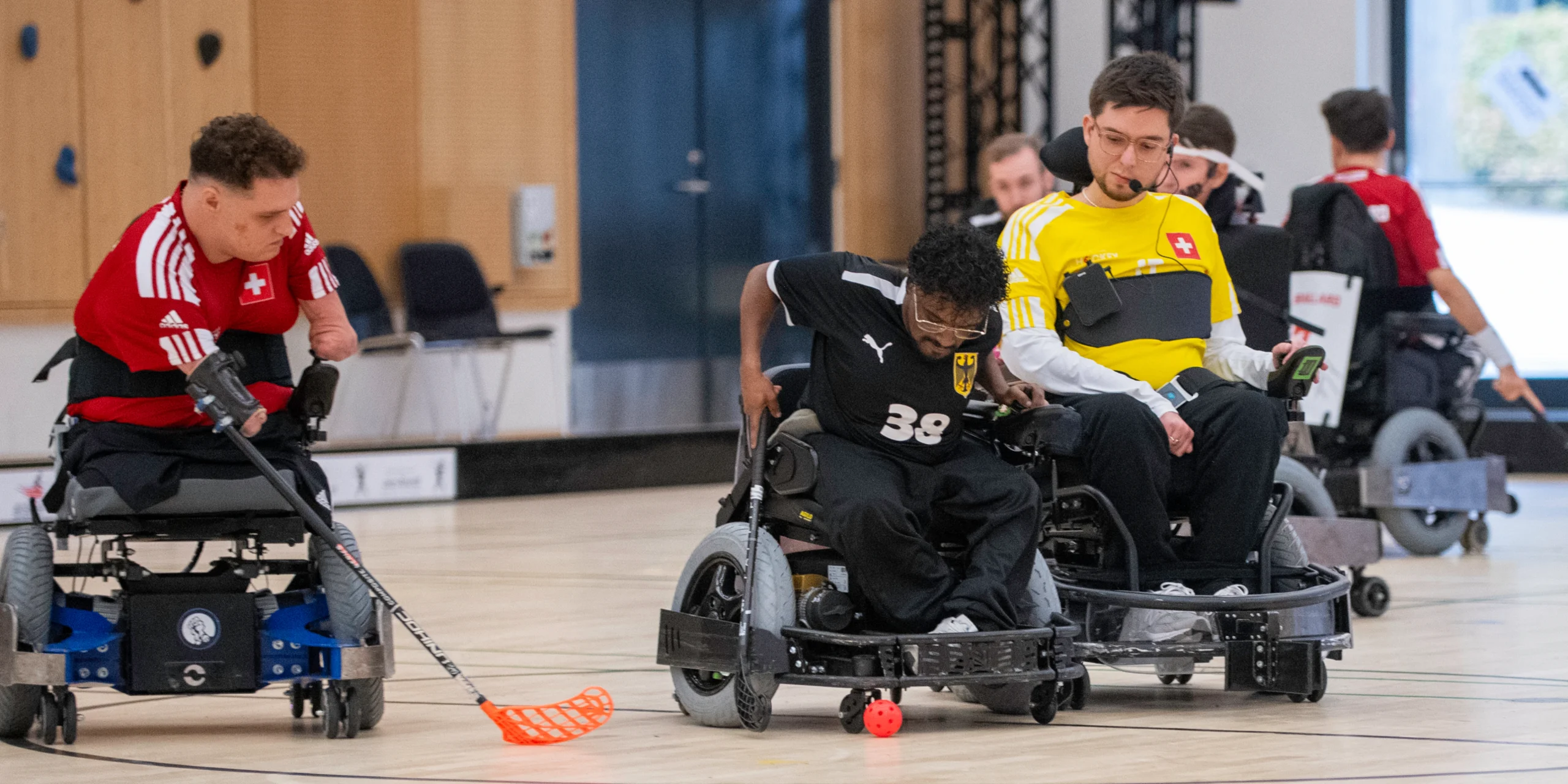
Noé Spirig delivered an outstanding 2025 season, establishing himself among the leading athletes in powerchair hockey. At an age of 24, he helped Iron Cats win the Swiss national league title and earned best goalkeeper honors at both the APHC Summer Camp and the international tournament in Eindhoven.
His versatility was equally evident at the APHC 2-versus-2 tournament in Antwerp, where he scored the most t-stick goals and was named best t-stick player. He also contributed to Switzerland’s third-place finish at the IPCH Dutch Nations Cup, confirming his impact at international level.
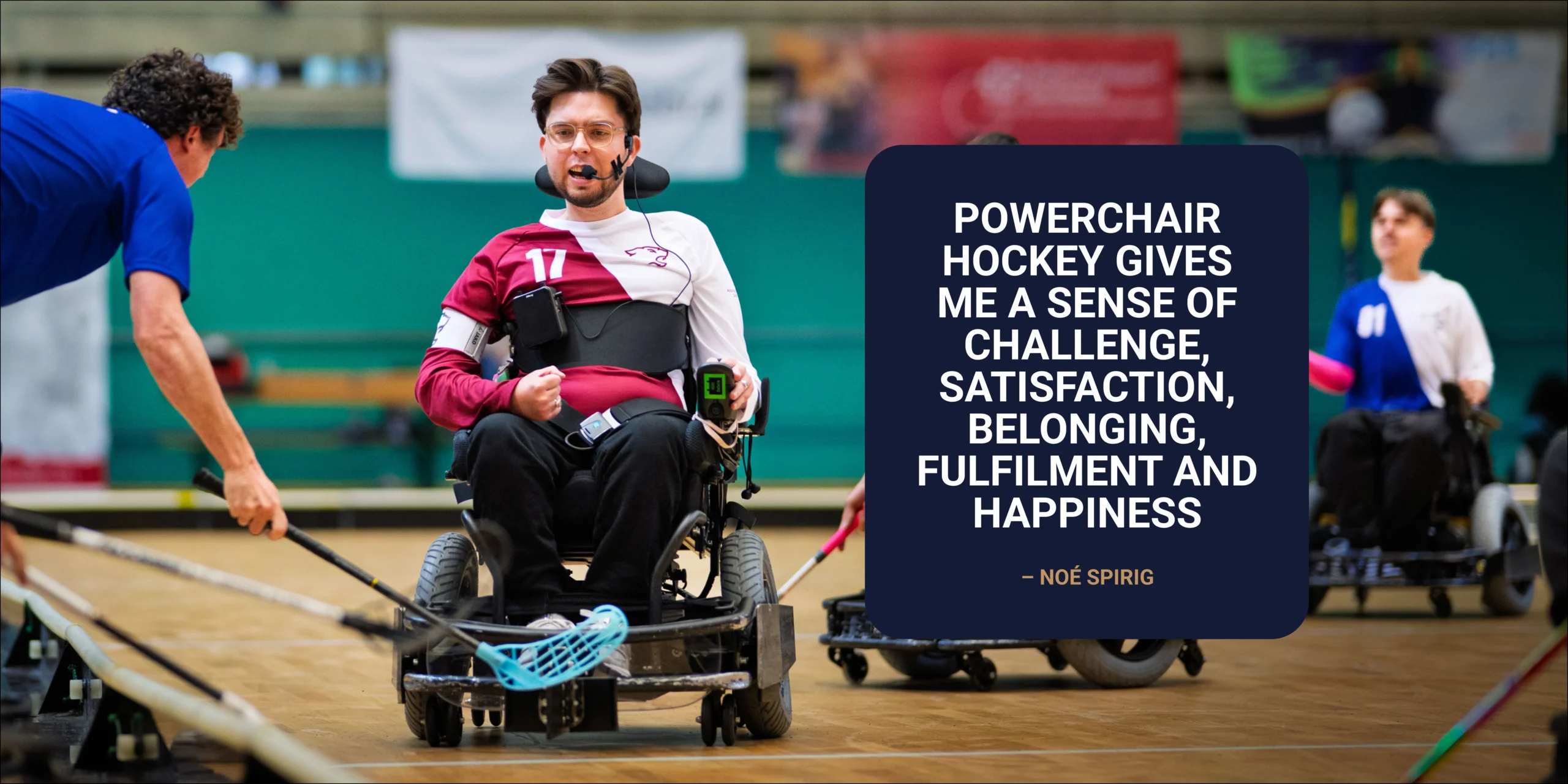
In this interview, Spirig reflects on performance, responsibility, and the role athletes play in shaping the future of powerchair hockey.
(Read the interview under the image.)
Interview
What does being named player of the year mean to you personally?
Noé Spirig: “To be honest, it’s a great honor for me. At the start of my career, I never expected or imagined I’d win an award like this. My goal has always been to make it to the national team and play internationally. The fact that I’ve become this award makes me proud, especially as a goalkeeper. Usually, it’s the top scorers who win such prizes, not those who prevent goals. I am proud and grateful.”
What moment in your journey had the biggest impact on you?
Noé Spirig: “My first goal as a 11-year-old boy, playing for the first time on an international level, during the European Championships in Finland 2012. It was the first time I’d taken part in a competition outside Switzerland. I was very young and I remember counting down the days until the tournament started. I could not sleep the days ahead the tournament because I was so excited.
My biggest wish was, to be chosen to play and, if possible, score a goal. When I managed to score a goal in the final match of the tournament, I was so incredibly happy! In that moment I took the decision, that I wanted to be part of every single tournament with the national team.”
How has powerchair hockey changed you beyond the competition?
Noé Spirig: “Ever since I started, powerchair hockey has given me energy, motivation and joy! I’ve always looked forward to matches, tournaments and training sessions with great excitement. I can hardly wait for matches and tournaments. Over time, I’ve realized that if you set yourself goals and work hard towards them, it’s possible to achieve a great deal.
At the start of my career, it was unthinkable to me that I would ever win a medal at a World Championship or a tournament. I learnt through powerchair Hockey, that you can achieve anything if you don’t let yourself get discouraged. This attitude of sticking with it and working hard for something, has definitely had a significant influence on me outside of sport as well.”
What standards do you set for yourself as an elite athlete?
Noé Spirig: “The most important thing is to reflect and consider where you went wrong. What could you have done better, or what wasn’t quite right? If you set high standards for yourself, you can also expect high standards from others. But first, you must ask yourself what could be improved. In my opinion, that’s what makes an elite athlete, and that’s what I try to put into practice myself.”
How do you prepare mentally and physically for international competition?
Noé Spirig: “In the days leading up to a tournament, I make sure I get enough sleep and try not to pack my days full of appointments. Of course, that’s not easy alongside my studies and other commitments, but I try to keep these to a minimum. I also make sure I eat a balanced diet in the days leading up to the match. These are the most important points, both mentally and physically.
Mentally, however, I like to prepare for the matches. When are we playing? Who are we playing against? Which players are in the opposition team? What is our plan? What should I look out for? What is our strategy? I go through these thoughts to prepare myself for the matches. Sometimes I also watch videos to get a feeling for the opposition.”
What responsibility comes with being a top player in a growing sport?
Noé Spirig: “As a good player, you act as a role model for the sport. You are not only a role model for other players, but also have a responsibility towards the dedicated people who put an incredible amount of voluntary work into this fascinating sport. Countless people invest a huge amount of energy and free time in this sport to provide a platform for the players and teams. It is important to be aware of this and to value their commitment. You are a face of the sport, and younger players in particular look to the top players to learn from them.”
How can top athletes help grow powerchair hockey internationally?
Noé Spirig: “The better and more sophisticated the sport becomes, and the better it is played, the more fascinating it becomes and the more it can spark curiosity and capture people’s attention. Top athletes can give interviews and talk about the sport in a knowledgeable and inspiring way. They can share their enthusiasm and love for the game.”
What role do coaches, referees, and leaders play in developing the sport?
Noé Spirig: “Coaches play a key role. There aren’t yet enough talented coaches around to be able to develop the sport on different national and international levels, at least in my experience. But that is exactly what is needed to develop world-class players. Good coaches not only have a deep understanding of the game and possesses analytical and strategic skills, but they also know how to shape and motivate a team so that every player can play to their strengths.
Incidentally, referees are just as important. They are equally crucial, because without them, even the best players cannot play. Systematic support for coaches and referees is highly desirable to ensure that the sport can continue to develop.”
What would you like young players to understand about dedication and growth?
Noé Spirig: “You must give a lot to be successful. You need that drive. You have to be prepared to invest a lot in the sport and put other things on hold for it if you want to be successful.”
What does “Impact That Lasts” mean to you?
Noé Spirig: “Sport has taught me the value of teamwork. It has taught me to show perseverance and commitment; these skills help me in life and have a lasting impact. But it is also much more than that. For example, systematic support for sport, in the form of talent development programs for players, coaches and referees, has a lasting impact. Regular coverage of powerchair hockey in media aimed at informing the public, has a lasting impact and helps raise awareness of the sport and its needs. And more in general support for disabled sports promotes the inclusion of people with disabilities in society.”
What kind of legacy would you like to leave in the sport?
Noé Spirig: “I want to keep improving and achieve my goals, but above all, I want to achieve our goals as a team. Naturally, I want to be as successful as possible in doing so. I hope that people will speak of me as a good player, and as a esteemed member of the community and a valuable ambassador for powerchair hockey.”
Why is it important to recognize those who shaped powerchair hockey?
Noé Spirig: “It is essential – and more than just important – to acknowledge what has been achieved so far! Powerchair hockey would not exist today if so many people had not made all these valuable contributions. By this I mean everyone who is or has been involved in this sport. All the players and coaches, referees who have shaped its sporting and tactical development, and all those who, off the fields, have dedicated themselves wholeheartedly to its professionalization, development and execution.”