
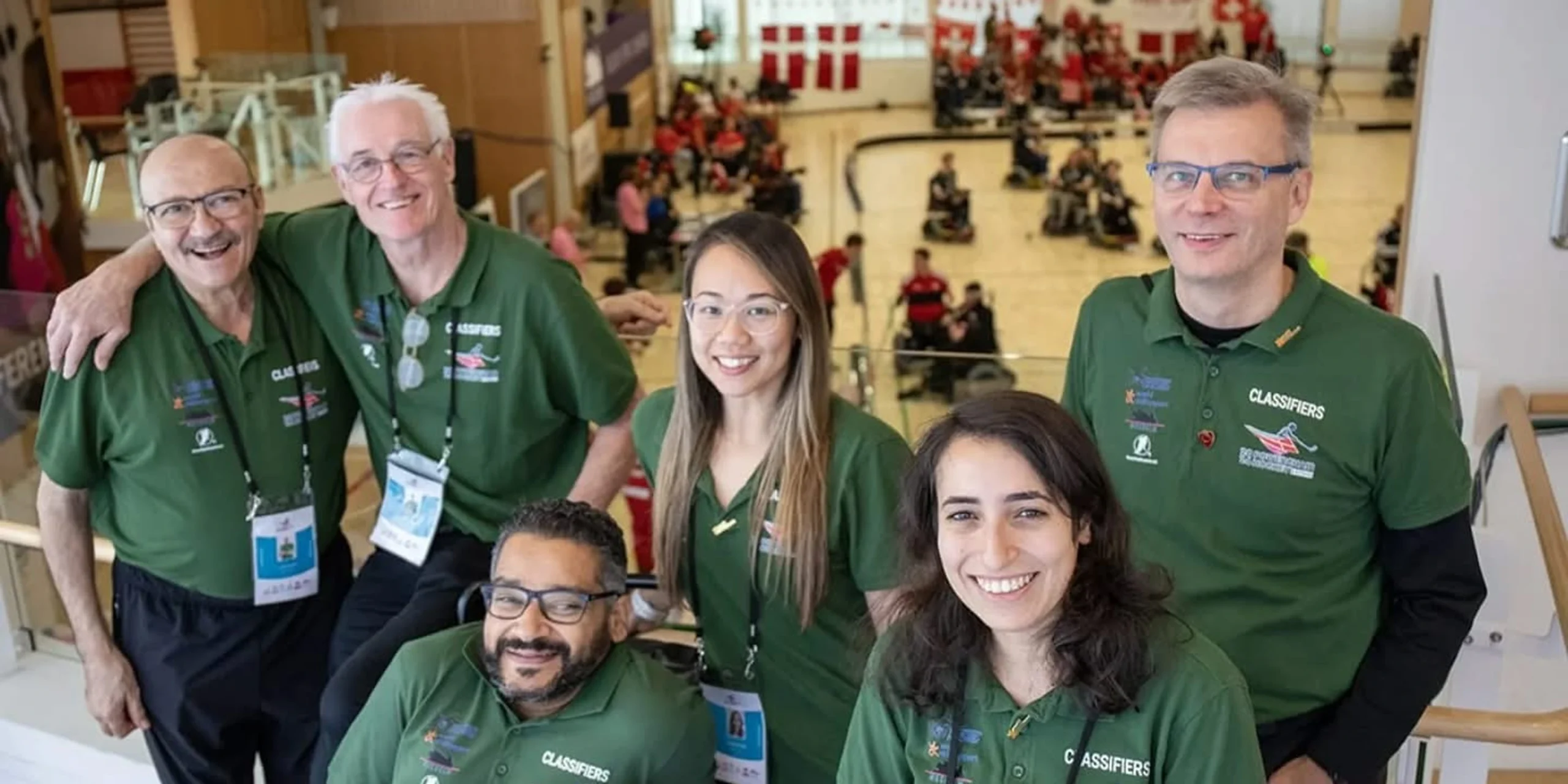
Classifying with Purpose: Anna Elizabeth on Ability, Fairness and Responsibility
In Powerchair Hockey, classification is essential to ensuring fair and meaningful competition. For Anna Elizabeth, this system provides the framework that allows athletes with severe physical impairments to compete on a level playing field, where success is determined by skill, teamwork, and strategy.
Serving as an IPCH Classifier is both a responsibility and a privilege for Anna Elizabeth. Through careful assessment and collaboration with fellow classifiers, she works to ensure that each athlete is evaluated fairly, consistently, and with respect. In this interview, she shares insights into the complexity of the classification process, the importance of transparency and communication, and how classification helps shift the focus of the sport toward ability, potential, and high-level performance.
(Read the interview under the image.)
What does being an IPCH Classifier mean to you?
Anna Elizabeth: “Being an IPCH Classifier is a humbling experience. It is a privilege to witness firsthand the capability, skill, and dedication these athletes bring to the sport. I deeply value the emphasis on ability over disability.”
Why is classification essential for fair competition in powerchair hockey?
Anna Elizabeth: “It can be easy to form assumptions about an athlete’s sport class based on observable performance, such as how forcefully they strike the ball. However, classification requires a structured and evidence-based assessment against eligible impairments. The process, particularly through the Physical and Technical Assessments, provides a detailed understanding – this becomes even more nuanced during the Observational Assessment where athletes may demonstrate capacities not easily replicated in the Physical and Technical Assessment.”
What responsibility comes with determining an athlete’s sport class?
Anna Elizabeth: “The role of a Classifier carries significant responsibility. External perceptions can often be formed without a full understanding of the training and review processes involved. It is therefore essential that classifications are conducted with thoroughness, objectivity, and integrity to ensure each athlete is accurately placed within their appropriate sport class.”
What principles guide you during the classification process?
Anna Elizabeth: “Each classification must be approached as a systematic, sport-specific, and athlete-centred evaluation. It is equally important to communicate clearly and respectfully, providing rationale for outcomes. The process should be collaborative – working with the athlete so they can understand and confidently own their sport class.”
How do you ensure consistency and objectivity in your decisions?
Anna Elizabeth: “Classification is grounded in standardised principles, as mentioned above. While each athlete presents uniquely, the consistency lies in how impairments are assessed. Classifiers work collectively to align interpretations and outcomes, consulting with one another to support fairness, consistency, and trust in the system.”
What is the most challenging part of evaluating functional ability?
Anna Elizabeth: “One of the most challenging aspects of classification is accurately evaluating functional capacity. This includes ensuring athletes are assessed at full effort, identifying any inconsistencies, and distinguishing true capacity from compensatory strategies, including the use of equipment.”
How does strong classification improve the quality of international competition?
Anna Elizabeth: “Accurate classification, combined with athlete understanding, underpins fair competition. It allows teams to be represented authentically, showcasing skill, strategy, and teamwork within the context of eligible impairments. Ultimately, it shifts the focus away from disability and towards capacity in high-level sport.”
How does your role support the credibility of the sport globally?
Anna Elizabeth: “The classification system provides a structured framework to assess all relevant body functions specific to powerchair hockey in a consistent and comprehensive manner. When applied appropriately, it reduces ambiguity and strengthens the credibility and recognition of the sport.”
What should athletes understand about the purpose of classification?
Anna Elizabeth: “Classification is impairment-based rather than performance-based. It focuses on the athlete’s underlying functional ability, not solely on what is demonstrated during gameplay.”
What does “Impact That Lasts” mean to you as a classifier?
Anna Elizabeth: “Being a Classifier means contributing to how classification is experienced and perceived by athletes. Historically, the process may have been met with uncertainty or apprehension, often due to limited understanding. There is an opportunity to foster a more positive experience through transparency, education, and inclusion. To me, this is the impact that lasts.”
How does your work contribute to long-term fairness in Powerchair Hockey?
Anna Elizabeth: “In my experience, it is important to actively listen to questions or challenges raised by athletes and coaches, and to respond with clear, evidence-based rationale. Even in complex or difficult discussions, maintaining empathy while remaining confident within professional scope is essential to ensuring athletes feel heard and respected. This contributes to fairness within the sport.”
What legacy would you like to leave within the classification system?
Anna Elizabeth: “Ultimately, classification should be an inclusive process that recognises the athlete as an individual – not defined by disability, but as someone choosing to participate in a meaningful and competitive sport.”