
Switzerland: The Making of World Champions
Some championships are won in a single match. Others are built over years of patience, setbacks, and relentless belief. The first-ever World Championship title for Switzerland was the culmination of a journey that transformed the nation into the world’s best. In this feature, Paul Emmering looks back at the decisive moments, the people, and the process behind one of the greatest achievements in Powerchair Hockey history.
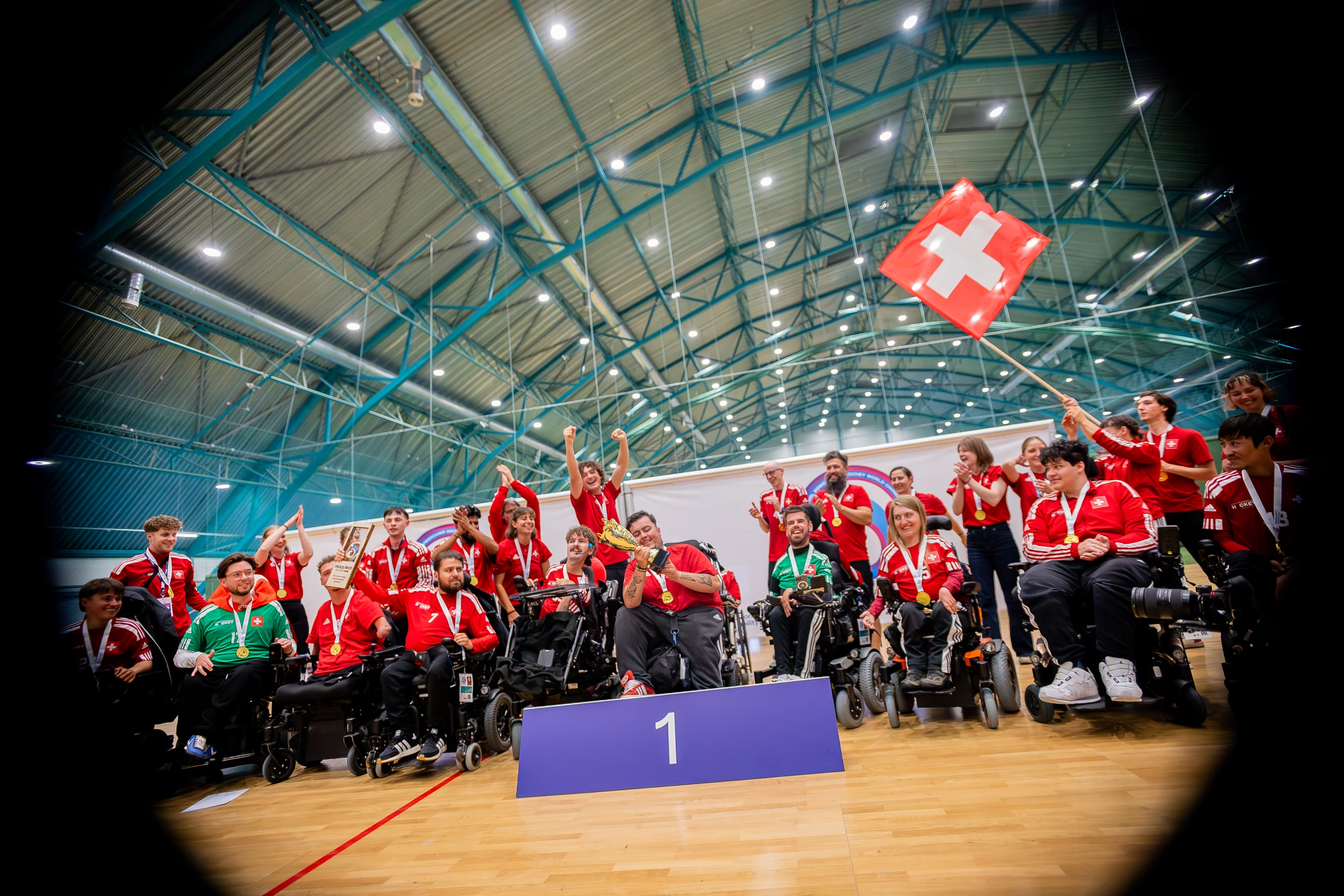
Switzerland Crowned World Champions
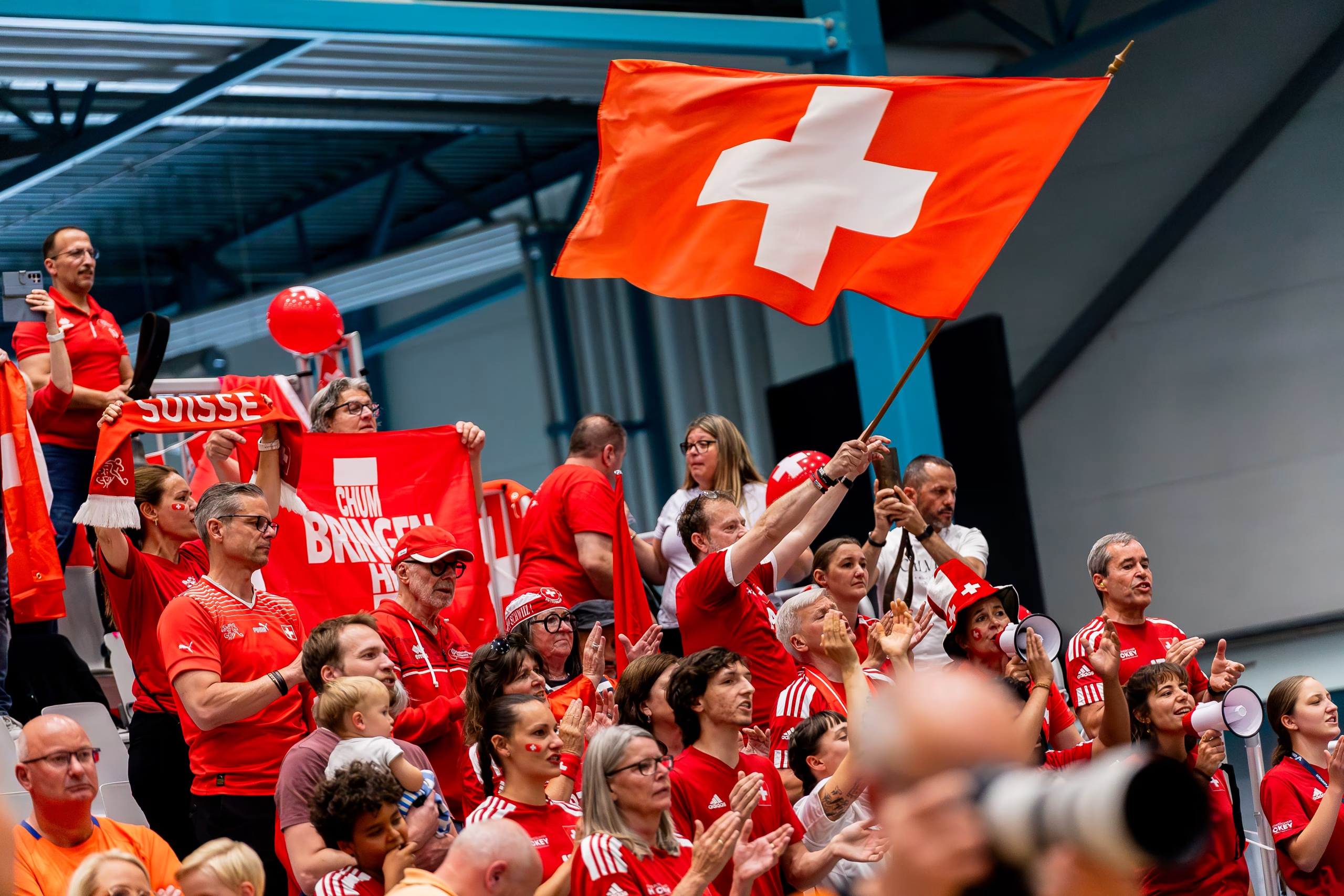
The final seconds ticked away slowly in Finland. Swiss cowbells filled the arena, drums echoed through the stands, and a rising chant of “Hopp Schwiiz” rolled across the hall. Spectators kept glancing at the clock. On the court, every player stayed locked in. The Netherlands pushed forward in one last attempt, Switzerland held their structure, fully aware that history was seconds away.
When the final buzzer sounded, there was no disbelief. Only release. Years of pressure, setbacks, near misses, and steady progression came out at once. Players collapsed into embraces, some in tears, others standing still for a moment before it fully landed: Switzerland were World Champions for the first time.
What followed was celebration, but the match had already been shaped long before the final whistle.
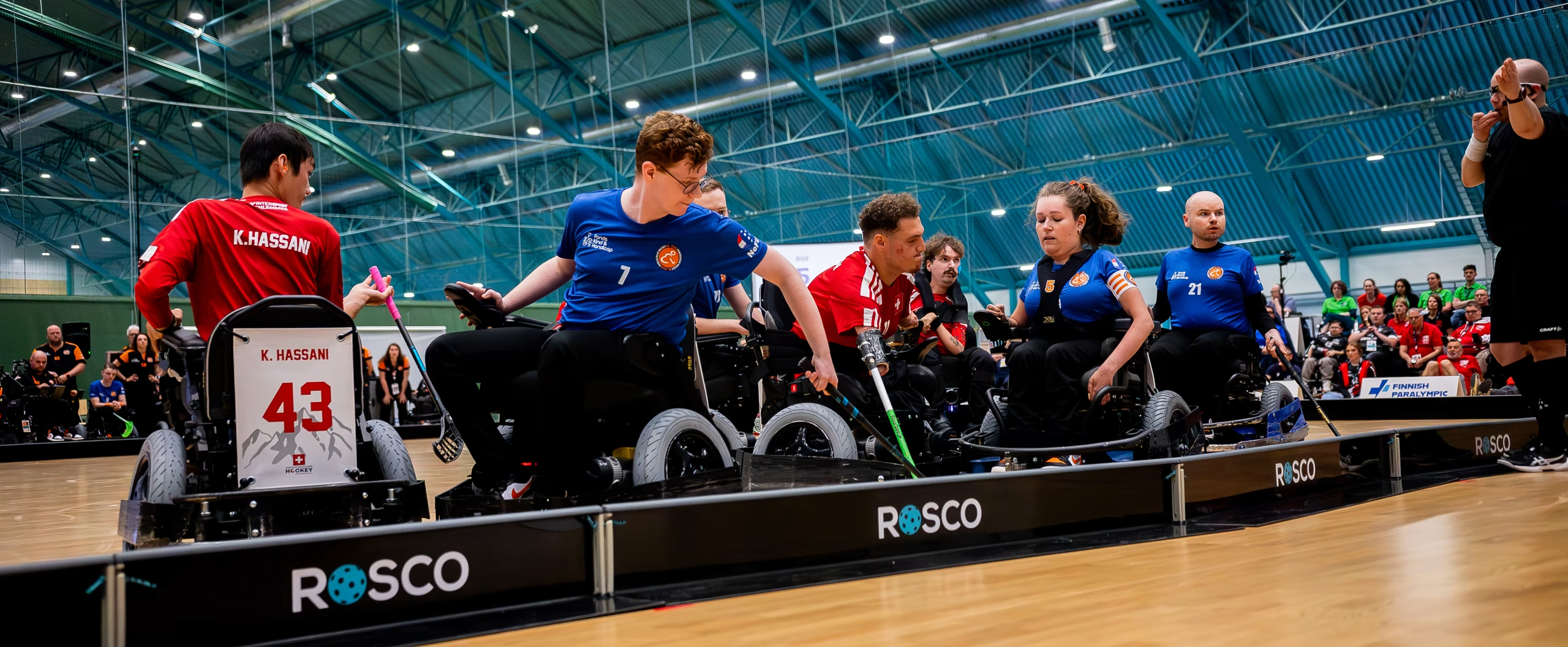
The Netherlands struck first, as they so often do in decisive games, forcing Switzerland into an early chase. For a brief moment, it felt familiar: a tight final, an early deficit, and the weight of previous knockout matches in the background.
But the response came immediately. A turnover under pressure opened space for Jan Schäublin, who finished a one-on-one with composure to equalise. Switzerland did not slow down. Khaleq Hassani completed the turnaround shortly after, and by half-time Switzerland led 2–1.
From that moment, the match settled into Swiss control.
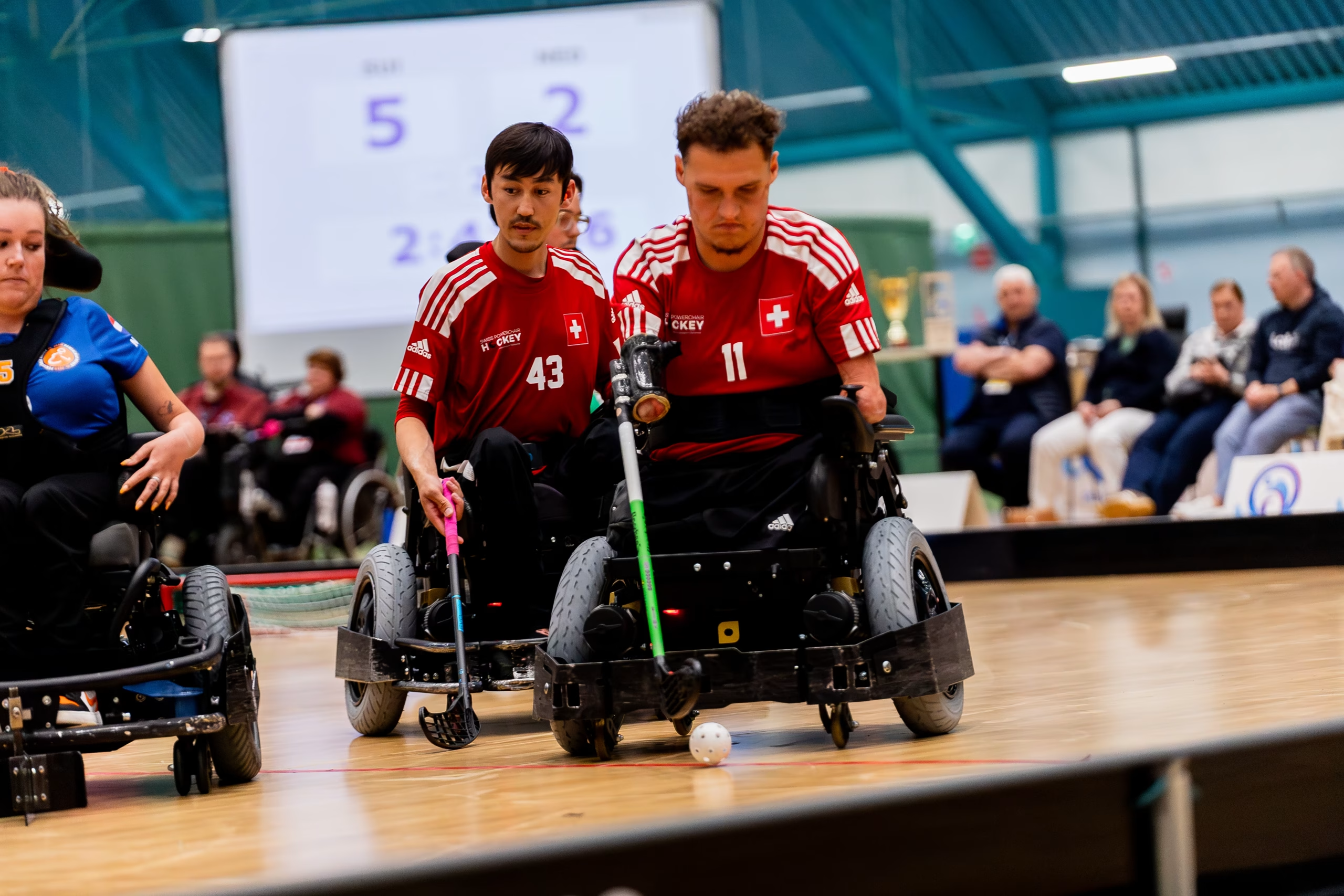
In the second half, Switzerland extended the lead to 4–1 through structured possession and disciplined spacing. The Netherlands reacted, reduced the gap, but every push met a response. The score moved to 5–2 before a late Dutch goal.
In the closing minutes, the pressure became constant. Switzerland stayed compact. Goalkeeper Noé Spirig produced decisive saves, reading transitions early and shutting down the final wave of attacks.
5–3. The title was secured.
The Road To The top
To understand this moment, you have to go back. When Switzerland entered their first European Championship in 2008, the goal was not medals. It was understanding the level. They finished last, but the foundation of a long development process was already being built.
In the early years, progress was measured in learning rather than results. The gap to Europe’s best was clear, but it slowly narrowed through repetition, training culture and a growing belief in longterm development.
A first real signal came in 2018. Switzerland defeated the Netherlands 5–4 at the World Championship in Italy, a team that had almost always dictated those matchups until then. It was more than an upset. It was a shift.
Still, progress was not linear. There were games that slipped away in decisive moments, often with semi-final implications.
The breakthrough arrived in 2022 at the home World Championship in Sursee, where Switzerland reached the semi-finals and won bronze. For the first time, success was no longer theoretical. It was visible.
Belief Built Over Time
Veronica Conceição has witnessed the entire journey from different perspectives: first as a player, later as captain, and today as team manager. Few people have experienced Switzerland’s rise as closely as she has.
“After winning bronze in 2022, lifting a major title no longer felt unrealistic,” she said. “When we reached the final in Finland, I honestly felt that nothing could go wrong anymore.”
For Conceição, the most significant transformation was the team’s mentality. Over the years, Switzerland learned how to deal with disappointment without losing belief. Every setback became another lesson instead of another reason to doubt. Confidence did not appear overnight. It grew through experience, resilience and countless hours of work.
That mindset was tested again throughout the tournament in Finland.
Switzerland opened with an 11–6 victory over Finland, a controlled but physically demanding start that laid the foundation for the days ahead. Against Italy, the match that effectively decided the race for first place in the group, Switzerland earned a hard-fought 5–5 draw. It was a tactical contest that demanded patience, discipline and defensive concentration.
On the final day of the group stage, Switzerland showed its attacking depth with a commanding 30–2 victory over Spain before defeating Denmark 21–5 to secure first place and a favourable semi-final.
Germany awaited in a fixture that had repeatedly ended in Swiss disappointment at major tournaments. This time, the script changed completely. Switzerland dominated from the opening minutes, rotated through the entire squad and produced one of the most complete performances of the tournament, winning 18–3 to book a place in the World Championship final.
They were no longer simply surviving difficult matches. They were controlling them.
Turning Preparation Into Performance
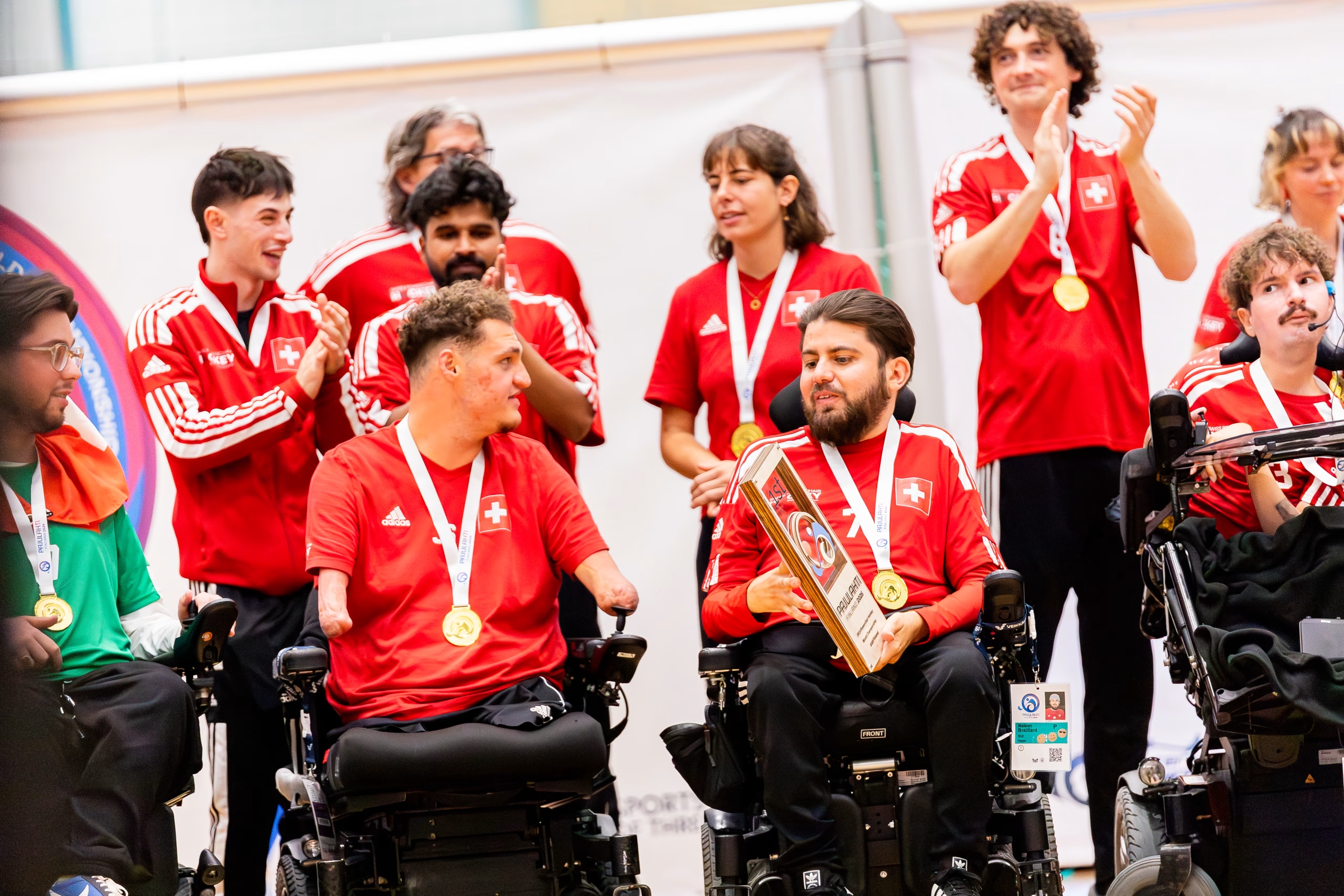
Captain Nelson Braillard has been part of this team since 2010. His perspective spans generations of Swiss squads, from early development years to the present title-winning group.
“I don’t think there was one moment that changed everything,” he said. “We grew with every game. By the knockout stage, we knew we could compete with anyone.”
Across those years, his role evolved into something beyond leadership in individual matches. Braillard became a constant in a team that changed around him, a reference point in moments where structure could easily have broken down under pressure.
That continuity was reflected in how the team developed over time. Experience accumulated game by game, setback by setback, until preparation and execution began to merge.
More Than Individual Brilliance
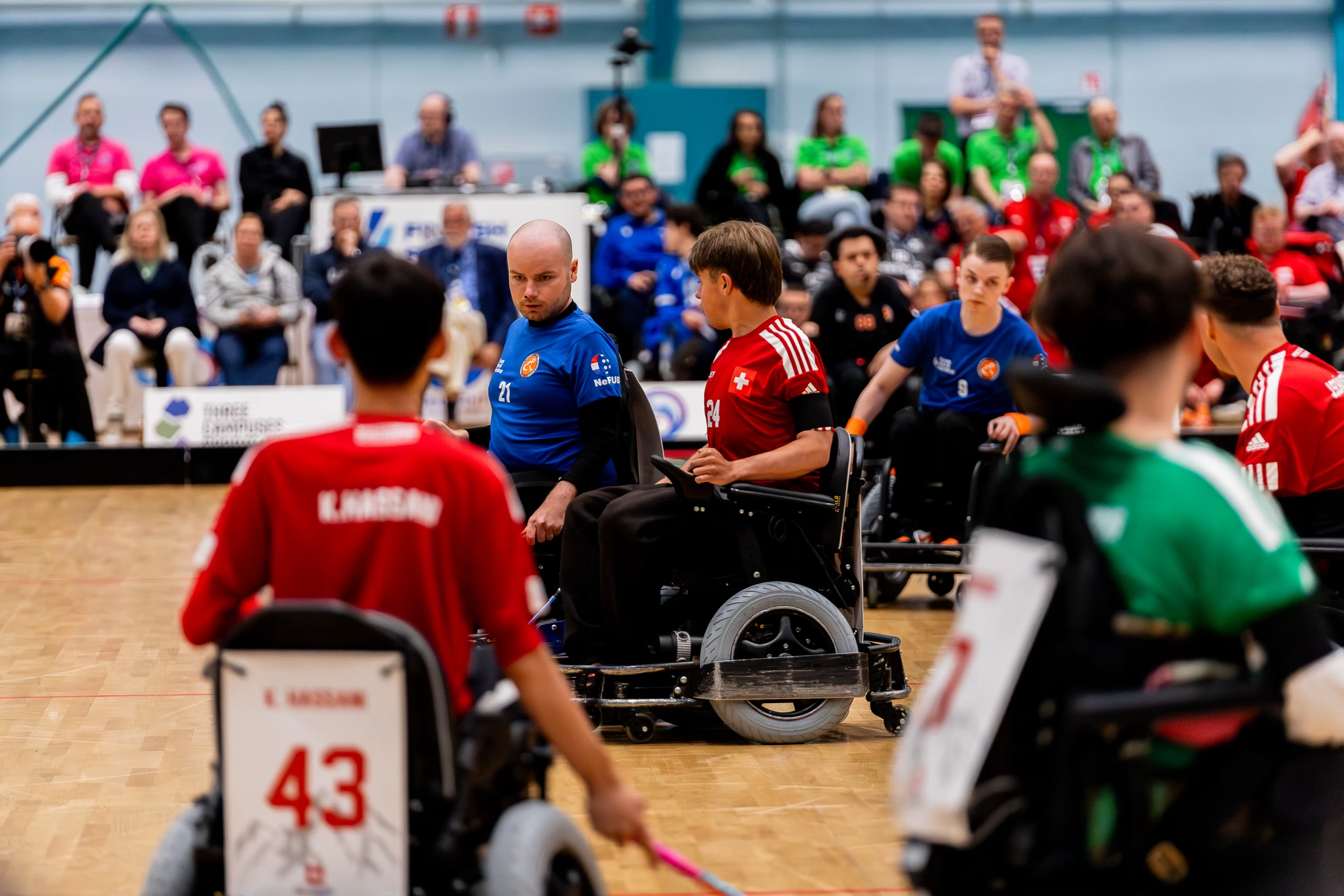
Championships are rarely won by a handful of players. Switzerland’s success was built on a squad in which every role mattered. Some led on the court, others shaped the game through tactical decisions, defensive stability or depth when it was needed most.
Nelson Braillard provided leadership in critical phases, stabilising moments that could have shifted momentum.
Dave Inhelder connected tactical instruction with on-court decisions and acted as a key reference point in the T-stick structure. Ilona Emmenegger added tactical variation in rotation, while Raphael Bachmann ensured reliability in the goalkeeper unit behind Spirig.
Spirig himself delivered a decisive tournament in goal, especially in late-game situations where control could have slipped away.
Jan Schäublin finished as tournament top scorer and remained decisive in key moments, including the final. Khaleq Hassani emerged as a breakthrough offensive force, scoring twice in the final and contributing consistently throughout the tournament. Dominik Zehnhäusern provided stability in build-up and precision in finishing. Manuel Melder repeatedly converted high-pressure chances. Emanuele D’ovidio, in his first World Championship, showed clear long-term potential.
Every Swiss hand stick player scored during the tournament. That balance reflected more than offensive quality. It reflected a team in which everyone contributed to the outcome.
The Final Piece
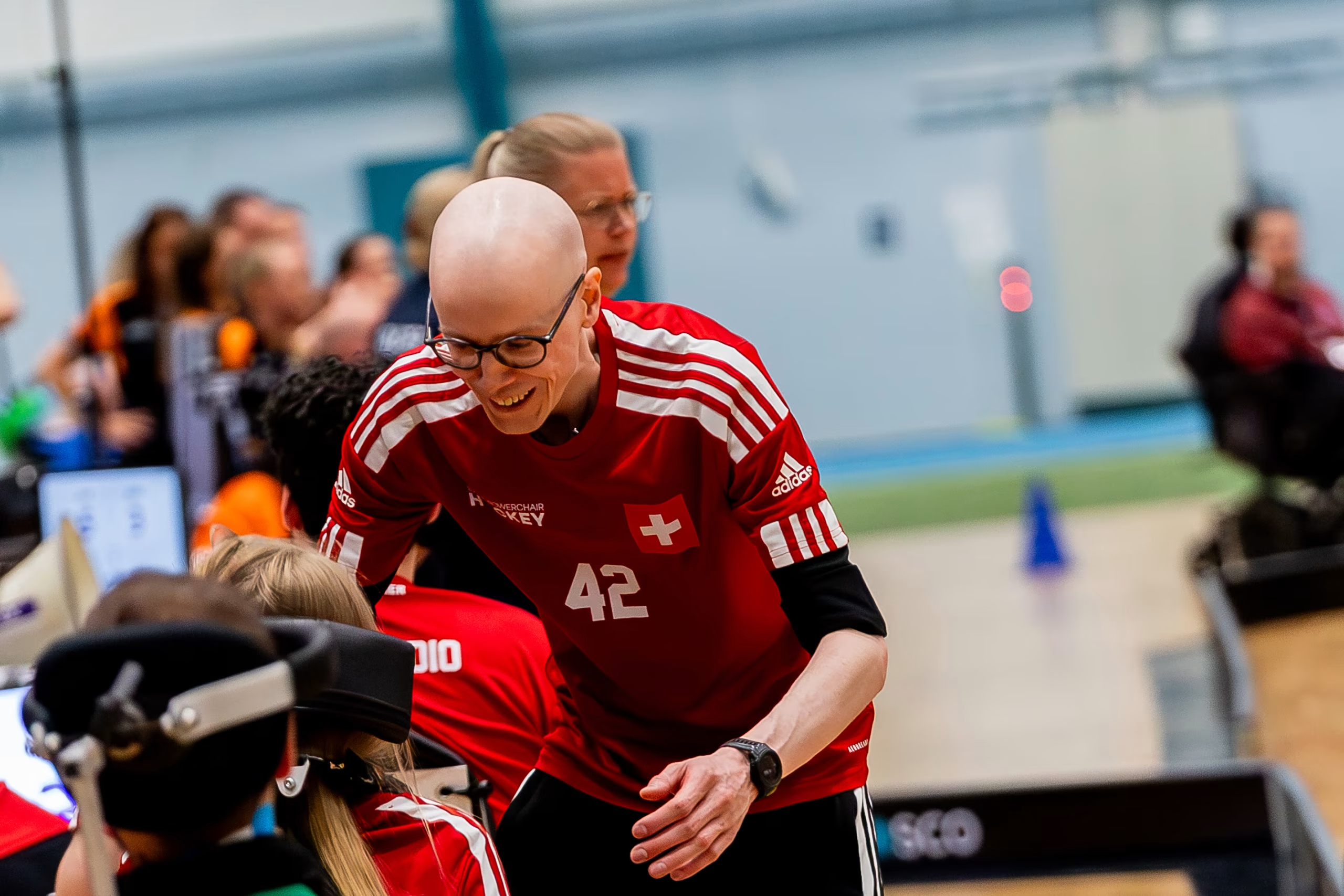
Head coach Rico Romano inherited a team that was already competitive at the highest level. His task was not to rebuild it, but to refine it.
In the months leading into the World Championship, preparation became increasingly specific. After the Nations Cup in De Rijp, Switzerland trained with a clear focus on repetition, discipline and matchlike scenarios. Situations such as power plays, defensive phases, restarts and shifting game states were rehearsed repeatedly until responses became automatic.
“Sometimes we almost got lost in the details,” Romano said. “But because of that preparation, we always entered the court with confidence. We knew we would find a solution, no matter what happened.”
Assistant coach Vasco Caprez played a key role in maintaining that intensity. Training standards stayed consistently high, even when repetition could have turned routine. The demand never dropped, and that pressure in training translated directly into stability in competition.
That stability became visible in the final itself.
Switzerland did not change their identity for the Netherlands. They trusted what had been built over months. Their defensive structure around midfield disrupted Dutch build-up play early, forcing attacks into less comfortable areas. Transitions were controlled before they could turn into momentum swings. Behind it, goalkeeper Noé Spirig was integrated into a clear blocking system that reduced chaotic phases and limited second-chance situations.
Nothing in this performance relied on improvisation. Everything relied on preparation being executed under pressure. That was the final piece of Switzerland’s rise.
More Than a Title
Switzerland’s first World Championship will not be remembered only for the trophy.
It will be remembered for what preceded it, because this was not a sudden rise. It was a long sequence of setbacks absorbed, analysed and carried forward. In many ways, Switzerland’s defining trait was not dominance, but persistence in learning.
Over time, something fundamental shifted. Losing stopped being a contradiction to winning. It became part of the process that made winning possible.
Every victory was built on an earlier defeat. Every step forward grew out of a setback that the team refused to accept as the end of the story.
That is the part of this story that extends beyond sport.
Switzerland are World Champions. Not as an interruption, but as a consequence.