

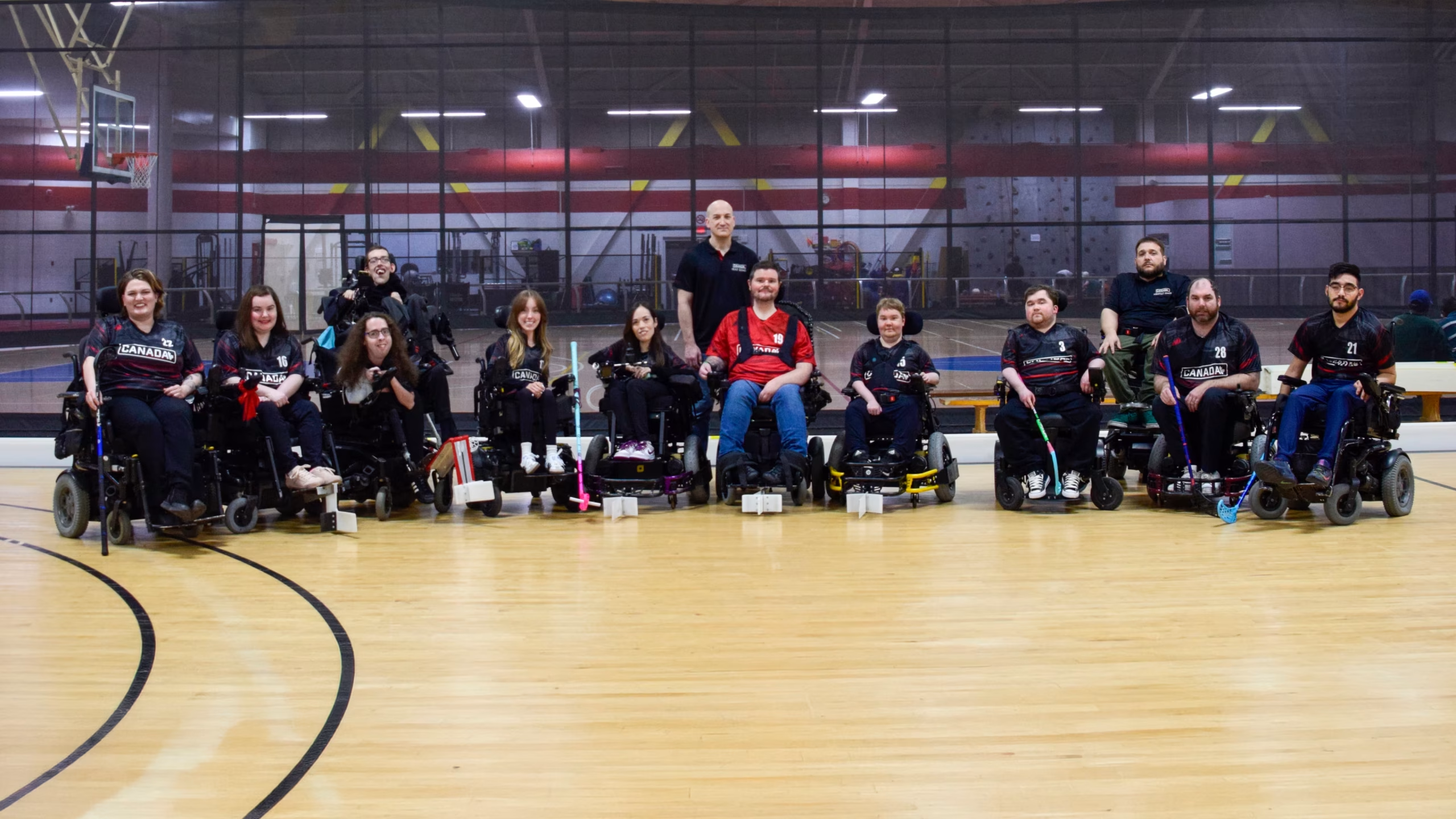
As we approach the next World Championship, IPCH is launching a special collaboration to present all participating teams. For this project, we are proud to work with Paul Emmering, former German handstick player and scorer of Germany’s historic 2010 World Championship golden goal. With his long-standing experience in Powerchair Hockey, Paul will provide analyses, insights, and expert perspectives throughout our road to the World Championship. In this article, you can read more about Canada’s insights.
From the Birthplace of Hockey to the World Stage
After Australia, no team faces a longer journey to the 2026 World Championship in Finland than Canada. Widely regarded as the birthplace of ice hockey, Canada is a nation where sport forms a central part of national identity.
The country is equally famous for its immense natural beauty. Vast forests, towering mountain ranges, crystal lakes and Arctic landscapes stretch across one of the largest territories in the world. Landmarks such as the Rocky Mountains, Niagara Falls and thousands of freshwater lakes have helped define Canada’s global image.
Canadians are often seen as among the friendliest people in the world. Once the opening whistle blows, however, they will have nothing to give away.
A Young Program with Growing Ambition
For Canada, this will be the nation’s third World Championship appearance after previous campaigns in 2018 and 2022. Despite geographic distance from Europe’s regular club competitions and the challenges that come with fewer international fixtures, Canada avoided finishing last in both previous appearances. That achievement becomes even more notable given that a slightly adapted version of Powerchair Hockey is commonly played in North America, meaning Canada must regularly adjust to international rules and styles when entering major tournaments.
Now the ambition is clear. Team Canada wants a stronger finish than at either of the last two World Championships.
New Leadership and Valuable Experience
Canada enters the tournament with a refreshed coaching structure.
Frank Belme takes charge as head coach for his first World Championship campaign. He is assisted by newcomer Chase Petruska and Stefano Occhialini.
Occhialini may be one of the most internationally experienced hockey figures within the Canadian setup. The Italian represented Italy at the first official World Championship in Helsinki in 2004 and scored 13 international goals during his playing career. His knowledge of elite competition should be a valuable asset for Canada’s newer generation.
Players Ready to Make a Name
Despite the long distance to Europe, Canada has continued to seek international exposure and took part in tournaments abroad, including the Skorpions Varese event in Italy last year. That competition offered a glimpse of who could shape Canada’s 2026 campaign.
Hand stick player Ramin Raunak stands out as a major attacking threat. With a distinctive swinging shooting motion, long stick reach and assured ball control, he is expected to play a central role in Canada’s offense.
Supporting him are talented T-stick players such as Meghan Hines, Ryan Belme and Jayden Chaban. Their work in build up play, blocking lanes and creating space could be crucial to unlocking Raunak’s finishing ability.
Canada’s greatest advantage may be unpredictability. Many players in this roster remain relatively unfamiliar to European opponents, giving the team a real chance to surprise.
Tactical Identity and Style of Play
Historically, Canada has relied on intelligent blocking structure and sharp passing sequences in dangerous areas near goal. Rather than overwhelming opponents with volume, the Canadian style has often focused on creating high quality chances through timing and positioning.
If they can execute that approach consistently, they have the tools to make life uncomfortable for more established nations.
Canada opens the tournament against Belgium before facing title contender Germany. Later the same day comes another enormous challenge against tournament favourite Netherlands.
The group stage concludes with a familiar meeting against Australia. At the 2022 World Championship in Switzerland, that matchup developed into a highly competitive battle for long stretches.
Outlook
For Canada, the primary goal will be to represent itself strongly, compete hard in every match and continue the upward trajectory of a developing program. Finland 2026 should be viewed as another significant step in the nation’s international growth.
While Canada may not enter the event as an obvious semi final candidate, dismissing them would be a mistake. With fresh leadership, emerging talent and a style capable of unsettling opponents, they are more than capable of producing one or two surprises.

