

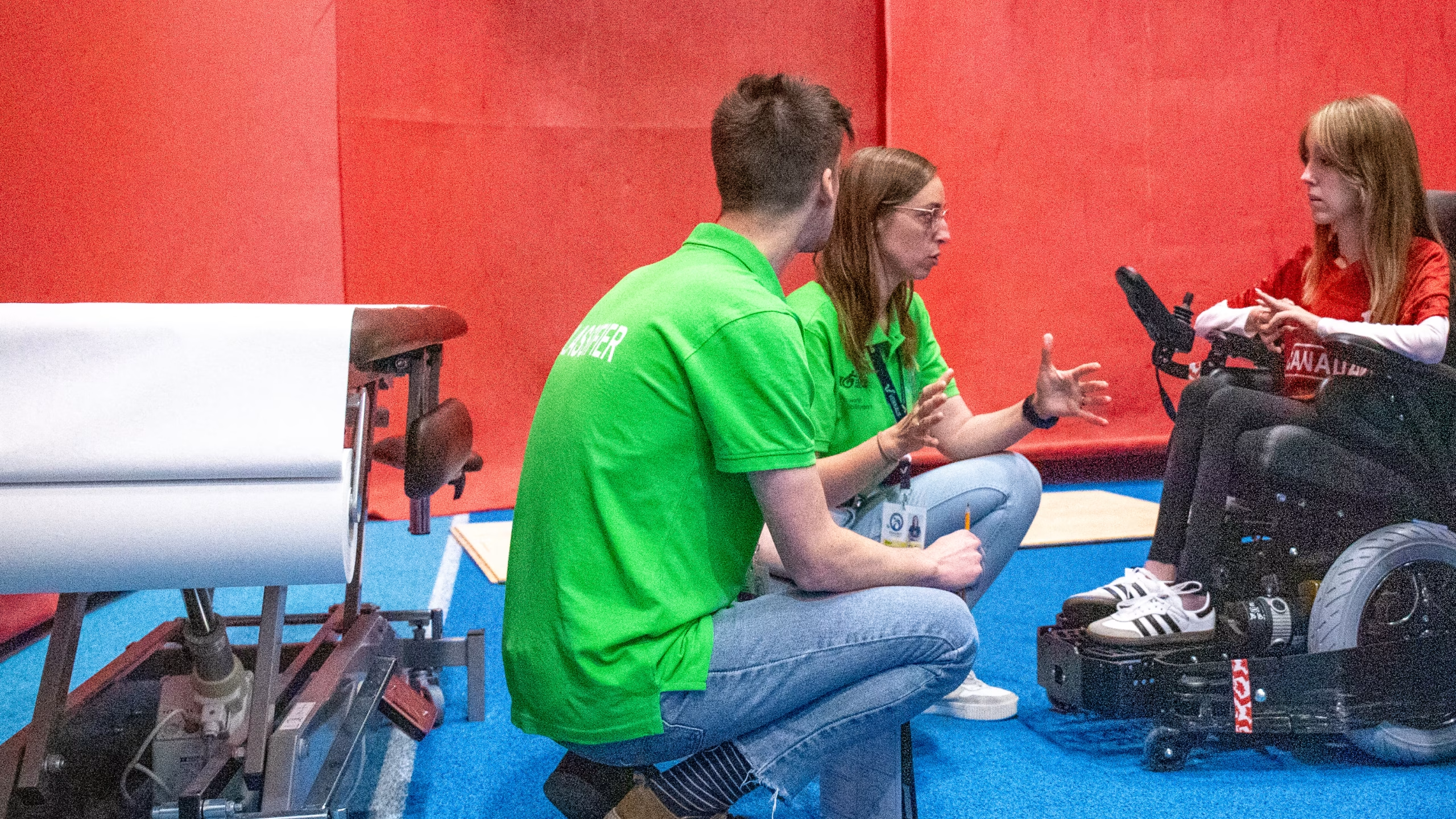
Following the conclusion of the 2026 IPCH World Championship, the updated IPCH Master List has now been published.
The Master List reflects all classification outcomes from the Championship and incorporates the revised Sport Class Status definitions and transition rules contained in the updated IPCH Classification Manual. These changes are intended to improve clarity, consistency and transparency in the management of athlete classification records across all IPCH sanctioned competitions.
Understanding the Sport Class Statuses
E – Expired
A Sport Class Status is designated Expired (E) when a classification is no longer valid.
An athlete will receive an Expired (E) status if:
- they have not completed an Evaluation Session or participated in an officially sanctioned IPCH competition for six (6) consecutive years; or
- they hold a Review at the Next Available Opportunity (R-NAO) or Review with a Fixed Review Date (R-FRD) status and the required review has not been completed within the permitted timeframe.
Athletes with an Expired (E) status are not eligible to compete in IPCH sanctioned or recognised competitions until they undergo a new Evaluation Session and are assigned a new Sport Class and Sport Class Status.
R-NAO – Review at the Next Available Opportunity
This Sport Class Status indicates that an athlete must be reviewed at the next available opportunity.
The status remains valid for a maximum of two (2) years. If the review is not completed within this period, the athlete’s status will automatically become Expired (E).
R-FRD – Review with a Fixed Review Date
This Sport Class Status requires the athlete to be reviewed after a specified Fixed Review Date.
Following the Fixed Review Date, the classification remains valid for a maximum of two (2) additional years. If no review is completed during this period, the athlete’s status will automatically become Expired (E).
NE-UHC – Not Eligible: Underlying Health Condition
This designation is assigned when an athlete is determined not to have, or not to have had, at least one medically and/or clinically diagnosed Underlying Health Condition following the IPCH Underlying Health Condition (UHC) assessment process.
Where the initial UHC Assessor is unable to confirm eligibility, IPCH appoints a second independent UHC Assessor before a final decision is reached.
Athletes designated NE-UHC are not eligible to compete in IPCH sanctioned or recognised competitions.
The designation cannot be Reviewed or Protested, but may be Appealed in accordance with the IPCH Classification Rules.
NE-EI – Not Eligible: Eligible Impairment
This designation is assigned when an athlete does not have an Eligible Impairment as defined by the IPCH Classification Rules.
This decision may only be appealed where there has been a procedural error that could reasonably have affected the outcome.
NE-MIC – Not Eligible: Minimum Impairment Criteria
This designation is assigned when an athlete has an Eligible Impairment but does not meet the Minimum Impairment Criteria (MIC) required to compete in IPCH.
This decision may only be appealed where there has been a procedural error that could reasonably have affected the outcome.
Key Transition Rules
To ensure consistency across the international classification system, the following transition rules now apply:
- An athlete who does not complete an Evaluation Session or participate in an officially sanctioned IPCH competition for six (6) consecutive years will automatically receive an Expired (E) status.
- An athlete holding an R-NAO status who is not reviewed within two (2) years will automatically receive an Expired (E) status.
- An athlete holding an R-FRD status who is not reviewed within two (2) years after the Fixed Review Date will automatically receive an Expired (E) status.
- Athletes with an Expired (E) status are not eligible to compete until they complete a new Evaluation Session and receive a new Sport Class and Sport Class Status.
National Organisations are encouraged to regularly review the Master List to ensure that athletes requiring review are identified well in advance of international competitions.
New Master List Feature
The updated Master List introduces a new green indicator column to improve transparency and facilitate the tracking athlete participation at major international events.
The green indicator identifies athletes who participated in the 2026 IPCH World Championship; and were therefore observed by the IPCH Classification Panel during the event.
It is important to note that the presence of the green indicator does not necessarily mean that the athlete underwent a full Evaluation Session or received a new Sport Class or Sport Class Status.
For athletes holding a Confirmed (C) Sport Class Status, the classification date shown in the Master List remains the date of their most recent Evaluation Session, provided no change to their Sport Class or Sport Class Status resulted from the Championship.
Where an athlete did undergo an Evaluation Session and a change to their Sport Class or Sport Class Status was made, the Master List has been updated accordingly.
This additional indicator provides National Organisations with a clear record of athletes who were present and observed during the most recent World Championship while maintaining the integrity of each athlete’s official classification history.
Looking Ahead – IPCH Classification Webinar
To support the implementation of the updated IPCH Classification Manual, IPCH will host an open online Classification Webinar in September 2026.
The webinar is open to:
- International Classifiers;
- National Organisations;
- National Classification Coordinators; and
- all individuals involved in the delivery of classification within IPCH.
The objectives of the webinar are to:
- present the updated IPCH Classification Manual;
- explain the practical application of the revised Sport Class Statuses and transition rules;
- introduce current and future research projects designed to further strengthen the IPCH Classification System;
- encourage National Organisations to work together with International Classifiers in their respective countries to collect classification data and contribute to ongoing research;
- share best practices and experiences from national programmes; and
- promote a more consistent and uniform application of the IPCH Classification Manual across all national leagues and international competitions.
The continued development of the IPCH Classification System relies on collaboration between the international and national classification communities. By working together, we can ensure that our classification system remains fair, evidence-based, transparent and consistently applied worldwide.
Further information, including the webinar date, agenda and registration details, will be circulated in the coming weeks.

