
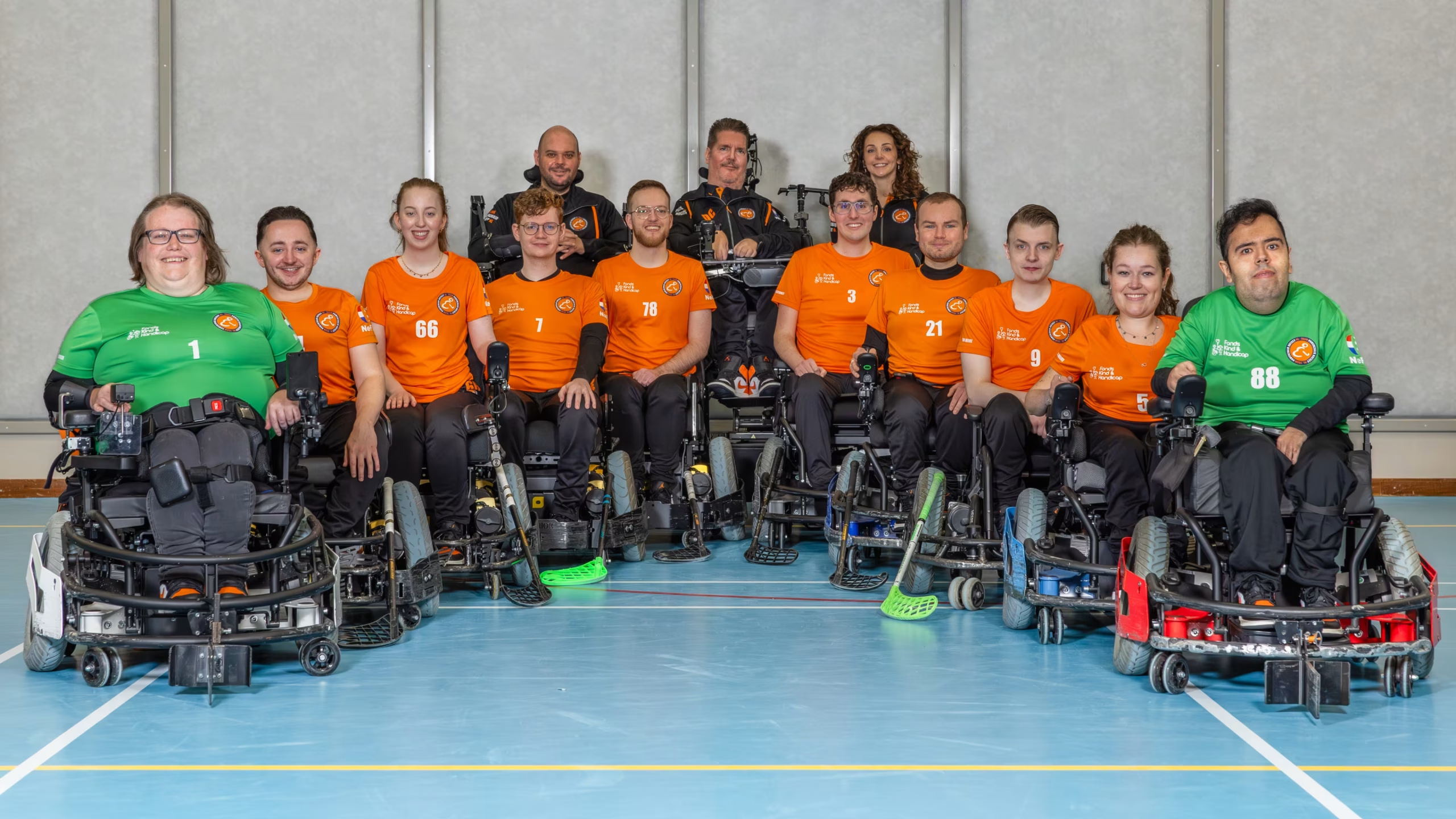
Netherlands: The Benchmark Returns at the World Championship 2026
As we approach the next World Championship, IPCH is launching a special collaboration to present all participating teams. For this project, we are proud to work with Paul Emmering, former German handstick player and scorer of Germany’s historic 2010 World Championship golden goal. With his long-standing experience in Powerchair Hockey, Paul will provide analyses, insights, and expert perspectives throughout our road to the World Championship. In this article, you can read more about The Netherlands’s insights.
A Small Country with a Relentless Competitive Edge
With around 17 million inhabitants, Netherlands is a relatively small nation, especially considering the remarkable number of elite athletes it consistently produces across a wide range of sports. That culture of high performance is deeply embedded.
Cities like Amsterdam are known for openness and international flair, while Rotterdam stands out for its modern architecture, Europe’s largest port and a forward looking, no nonsense mentality that reflects the country’s approach to progress. Eindhoven, often associated with innovation and technology, adds another dimension to the Dutch identity.
That same mindset carries directly into sport. The Dutch approach is consistently competitive, structured and ambitious. In Powerchair Hockey, that translates into one clear expectation: competing for anything less than the title is not part of the equation.
The Benchmark of the Sport
From technical excellence at handstick level to tactical discipline and sustained success, the Netherlands has set the standard in international Powerchair Hockey for years. European and World Championship titles have become part of the nation’s identity in the sport. With a track record built on consistency and innovation, every opponent measures itself against the Dutch system.
Legends Who Defined an Era
This dominance has been shaped by a series of exceptional players. Kamal Tahtahi is widely regarded as one of the greatest playmakers the sport has ever seen. His ability to read the game, deliver creative passes and finish with precision made him a complete offensive force. With 65 international goals, he remained among the world’s top scorers long after his career ended. Beyond his performance, Tahtahi earned universal respect for his fairness and sportsmanship, often described as a true gentleman of the game.
Berrie Hommel, now coaching Australia, was one of the most efficient finishers in history. His 104 international goals included numerous decisive moments in title races, defining what it means to be a world class striker.
Then there is Dennis van den Boomen, the Netherlands’ all time leading scorer. He played a role in every major title won by the national team before retiring after the 2024 European Championship in Denmark. His patience, timing and ability to deliver in key situations remain a benchmark for the next generation.
The current squad for 2026 continues that tradition of quality, with a new generation ready to take responsibility. Head coach Dick Cochius has a wide range of high-level options at his disposal.
One major absence, however, cannot be ignored. Jules van der Heijden will miss the tournament due to a serious injury. His absence is a significant loss not only for the Netherlands but also for spectators. With 95 international goals, he currently ranks seventh on the all-time scoring list and has repeatedly proven himself as a decisive player on the biggest stage, including standout performances in major finals.
Yet few nations are better equipped to absorb such a loss.
The Next Generation Steps Forward
Tim Heere is one of the leading candidates to take on greater responsibility. A powerful playmaker with a strong scoring instinct, his 69 international goals underline his ability to deliver at the highest level. He enters the tournament with the potential to be one of its defining players.
Another emerging talent is Lucas Schell. Already successful at club level, he combines composure with consistency and has contributed 43 international goals. His calm presence and reliability make him an important piece in the Dutch system.
Stijn van Zon adds balance as a tactical organizer and defensive specialist. With a classification of 1.5 points, he plays a crucial role in maintaining structure while also contributing effectively to attacking phases.
Beyond these names, the Netherlands possesses depth across the roster, with multiple players capable of stepping into key roles when needed.
Tactically, the Dutch combine structure with flexibility. Their ability to control games, adapt to different opponents and execute at a consistently high level makes them the most complete team in the tournament.
What truly separates the Netherlands, however, is their offensive depth. No other nation in Powerchair Hockey features as many elite scorers within the international rankings. The sheer number of high-level finishers gives them constant attacking options and makes it extremely difficult for opponents to focus on shutting down a single player.
They enter every match as the favorite, beginning with a clash against neighboring Belgium. That is followed by a meeting with a newly structured Australia, before facing Canada. The group stage concludes with the classic rivalry match against Germany, a fixture that has defined the sport for years.
Outlook
As reigning European champions, the Netherlands once again enters the World Championship as the team to beat. The absence of van der Heijden is significant, but the overall depth and quality of the squad remain exceptional.
If the next generation embraces responsibility and delivers consistent performances, there is little to suggest the title will go elsewhere. At the same time, the competition is closing the gap and arrives in Finland fully prepared to challenge the established order.