

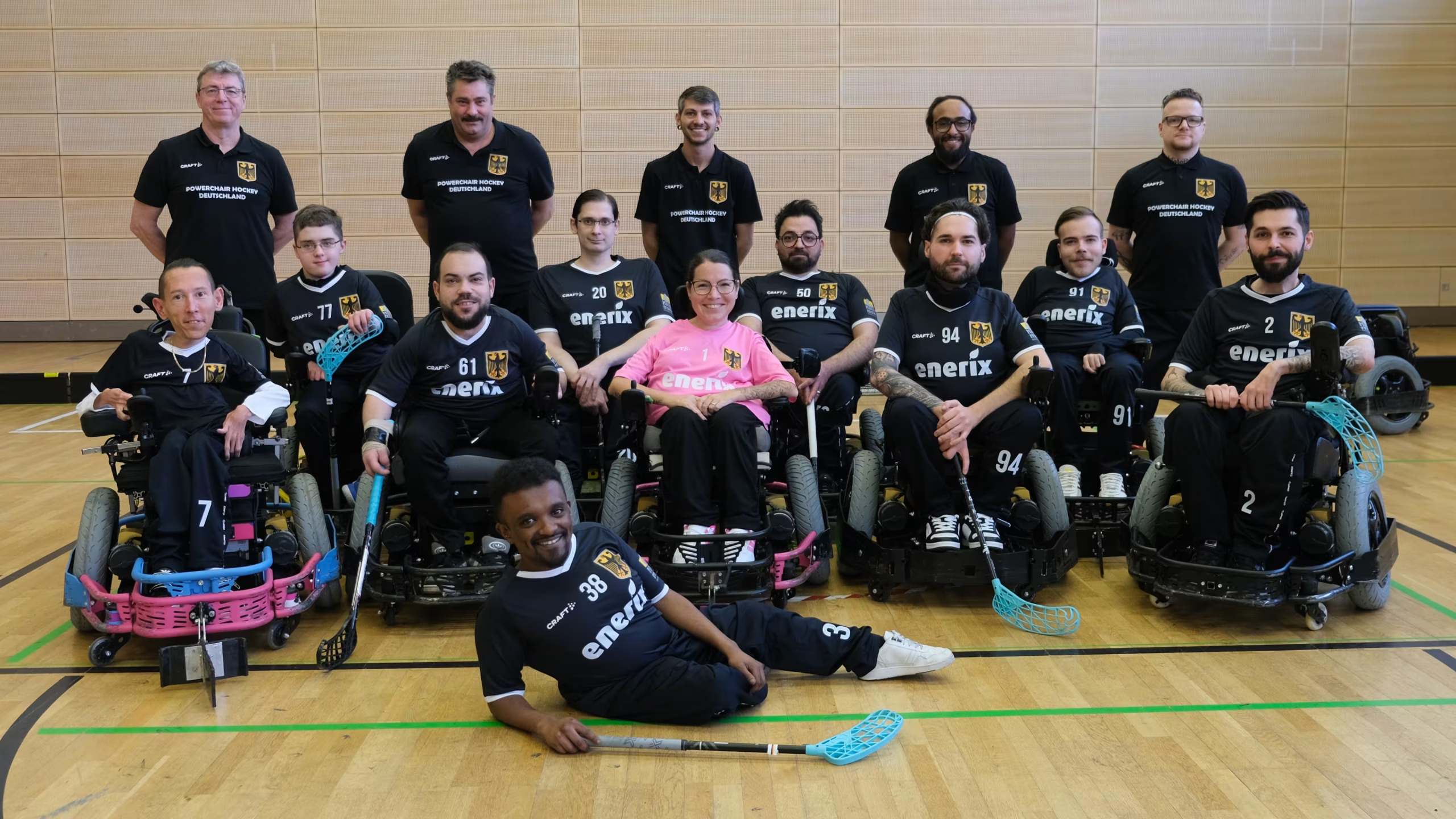
As we approach the next World Championship, IPCH is launching a special collaboration to present all participating teams. For this project, we are proud to work with Paul Emmering, former German handstick player and scorer of Germany’s historic 2010 World Championship golden goal. With his long-standing experience in Powerchair Hockey, Paul will provide analyses, insights, and expert perspectives throughout our road to the World Championship. In this article, you can read more about Germany’s insights.
Europe’s Largest Nation Brings Big Expectations
With around 84 million inhabitants, Germany is not only the most populous country in the European Union, but also the largest nation represented at the 2026 World Championship. Positioned at the heart of Europe, Germany combines global cities, economic strength and deep cultural influence. Visitors know Berlin for its history and creativity, Hamburg for its maritime identity and international character, and Munich for tradition, sport and world famous hospitality.
Abroad, Germany is often associated with structure, punctuality and discipline. In sport, it is equally known for resilience, competitive mentality and a refusal to quit. Those qualities have long defined German teams across many disciplines, and Powerchair Hockey is no exception.
A Powerhouse of the International Game
Germany has consistently belonged among the contenders at both European and World Championships. Whether measured by medals, final appearances or long-term consistency, the nation stands among the elite of the sport.
When combining European Championship and World Championship finals, Germany ranks second only to Netherlands in total appearances. In a remarkable historical twist, every one of those finals came against the Dutch, creating one of the sport’s defining rivalries.
That alone says everything about Germany’s place in international Powerchair Hockey.
The Night That Changed History
When veteran fans discuss unforgettable World Championships, one tournament returns again and again: the 2010 World Championship in Italy.
There, Germany defeated the Netherlands in an epic 7 to 6 victory after overtime. It delivered Germany’s first and so far only senior world title, but the significance ran even deeper. It was also the first defeat ever suffered by the Netherlands in international Powerchair Hockey competition.
For Germany, it was a championship. For the sport, it was a historic turning point. Several iconic names shaped that golden era.
Ramazan Sahin was a dynamic h-stick player who produced attacking moments while also earning a reputation as a fierce and highly effective defender.
Görkem Oguz captained the world champion side and orchestrated play with outstanding balance, elegant one on one control and precise distribution.
Then there was Stefan Utz, one of the foundational personalities of the sport in Germany. Utz helped drive development far beyond national borders and played a key role in bringing the 2014 World Championship to Munich. His impact on the game remains deeply respected.
A New Generation with the Same Ambition
Germany’s current squad measures itself against that history and does so without hesitation. The message remains clear: this team expects to challenge for titles.
For the first time, Pascal Sauer leads the national team as head coach. Following the tragic passing of the charismatic motivator Gerd Autenrieth, Sauer stepped into the role and added Nadir Mohamed as assistant coach. On the court, several core figures define the current side.
Jessica Trommer has guarded the German goal at world class level for years. Her saves have repeatedly kept Germany alive in major matches and often secured victories.
David Bauer is widely viewed as the tactical brain of the team. Especially on the defensive side, he provides structure and makes it extremely difficult for opponents to generate clean shooting chances.
And then there is Nasim Afrah, the central attacking force in the German system and one of the best German international scorers of all time. With 89 goals on the international scoring board he is on 10th place. Several more goals are eventually to come. His ball control, acceleration and ability to create decisive offensive moments were on full display in the 2024 European Championship final against the Netherlands, where he kept Germany in contention until the final stages.
Identity, Structure and Tournament Path
Germany is expected to once again build from a disciplined and physically robust defensive base. While Afrah should remain the key offensive catalyst, Germany’s attack may show greater variation, with more involvement from supporting players around the goal area.
That balance between defensive control and selective attacking pressure has long been one of Germany’s strengths.
The opening game against Australia carries immediate importance. A victory there would go a long way toward securing a semi final place. Group matches against Canada and Belgium follow before the likely showdown for first place against Netherlands closes the group stage.
That meeting could feel like an early final and a revealing preview of what may come later in the tournament.
Outlook
Barring a major surprise, Germany should reach the semi finals and once again position itself among the title contenders. Few nations combine track record, tactical clarity and competitive mentality at this level.
The bigger question is whether Germany has learned the right lessons from the 2024 final defeat. If the answer is yes, this team has every tool required to lift the world title once again.

