

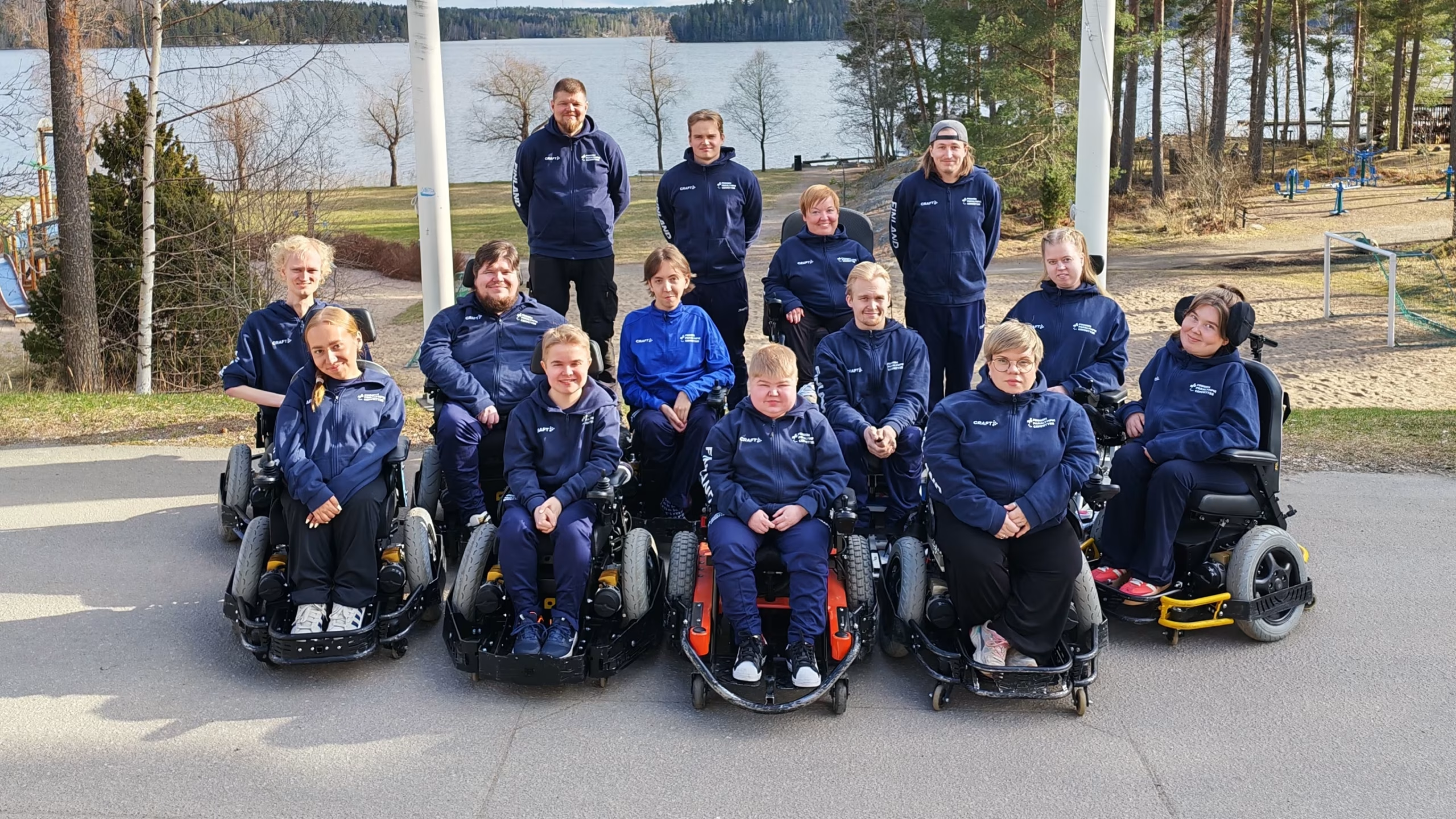
As we approach the next World Championship, IPCH is launching a special collaboration to present all participating teams. For this project, we are proud to work with Paul Emmering, former German handstick player and scorer of Germany’s historic 2010 World Championship golden goal. With his long-standing experience in Powerchair Hockey, Paul will provide analyses, insights, and expert perspectives throughout our road to the World Championship. In this article, you can read more about Finland’s insights.
A Northern Nation Ready to Welcome the World
Stretching across the far north of Europe, Finland is a nation of forests, lakes and long winters, home to around 5.6 million people and a sporting culture built on resilience, discipline and collective spirit. In 2026, Finland will once again welcome the world of Powerchair Hockey, becoming hosts of the World Championship for the second time after the historic first official World Championship in Helsinki in 2004.
The tournament venue in Pajulahti Olympic and Paralympic Training Center already holds a special place in the sport’s history. Located near the district of Nastola, roughly 90 minutes from Helsinki, Pajulahti is surrounded by classic Finnish scenery of deep woodland, open skies and lakeside landscapes. It is one of Finland’s leading high-performance sports centres and has strong roots in para sport development. In 2012, it hosted the European Championship where Finland thrilled home fans by claiming a sensational bronze medal.
Proud History and Lasting Tradition
That success reflected a nation with a proud and consistent Powerchair Hockey tradition. Finland has been a regular presence at both World and European Championships and has produced several players who shaped generations of the sport.
Among the great names of the past, two hand stick players stand above the rest. Jorma Lehmus was the creative engine of earlier Finnish teams, a playmaker known for sharp finishing instincts and devastating long-range shooting. Alongside him came Juha Palonen, still the most prolific scorer in Finnish history with 102 international goals, a total that continues to place him among the sport’s elite marksmen. Palonen built his reputation through intelligent movement, anticipation and ruthless efficiency in front of goal.
A New Generation Takes Centre Stage
Now a new generation is ready to carry that legacy forward.
The headline figure is hand stick player Kasper Vuorinen, one of the most dangerous offensive talents in Europe. His close control and vision make him a constant creative threat, but it is the precision and power of his shooting that truly sets him apart. At the 2024 European Championship in Denmark, Vuorinen scored 22 goals and further strengthened a growing international reputation. With 59 career international goals already, he continues to climb the all-time scoring charts.
Alongside him is Jesse Mursu, a highly intelligent two-way player whose reading of the game gives Finland balance on both ends of the court. His understanding with Vuorinen could be one of the decisive partnerships of the tournament.
Another intriguing option is Walter Östergård, who made his major tournament debut at the last European Championship. If his development continues, he could become an important X factor on home soil.
Experience from the Bench and in Goal
Head coach Elias Winter also benefits from proven experience. Ella-Riikka Isometsä (31 goals) has delivered for Suomi, the Finnish name for Finland, on many major occasions. Her instinct around goal is outstanding, and her energy often drives the team’s tempo. When chances appear, she converts them with impressive regularity.
No analysis of Finland would be complete without Atso Ahonen, one of the respected veteran goalkeepers of the sport. Calm, experienced and consistently reliable, Ahonen has frustrated opponents for years. He is especially renowned in penalty situations, where anticipation and composure often give him the edge.
Tactical Identity and Tournament Challenge
Tactically, Finland has long been one of the more adaptable teams in international competition. They are capable of building patient passing sequences, but they can also shift quickly into systems centred around a key finisher. That flexibility has often allowed them to trouble more heavily favoured opponents and keep matches alive deep into the contest.
At the 2026 World Championship, the opening match against Nordic neighbours Denmark could shape the entire campaign. In a fiercely competitive Group A that also includes Switzerland, Spain and Italy, margins are likely to be extremely tight. A strong start may be essential if Finland wants to reach the semi-finals.
Outlook
Finland enters the tournament as a dangerous outsider. A medal would require consistency under pressure, but with home support, tactical discipline and several match winners in the squad, they have every chance to become one of the stories of the championship. Whatever happens in 2026, this team looks well placed to remain a rising force in the years ahead.

